

Graves' disease: What it is, causes, symptoms & treatment

Contents
 Facebook
  X
X  Copy Link
Summary: Graves' disease is an autoimmune condition that causes the thyroid to become hyperactive, resulting in hyperthyroidism. This occurs when the immune system mistakenly targets the thyroid gland. Common symptoms encompass weight loss, anxiety, a fast heartbeat, and issues with the eyes. Contributing factors include genetic predisposition and environmental influences. Treatment methods comprise antithyroid medications, radioactive iodine treatment, or surgical intervention to regulate hormone levels.
[quote_box]
Graves’ disease is an autoimmune disorder that impacts the thyroid gland, a small organ in the neck that controls metabolism through hormone production. It is the most common cause of hyperthyroidism, a disorder where the thyroid gland becomes overactive, leading to excessive release of thyroid hormones. In Australia, this condition affects approximately 1 in 100 adults. with a higher prevalence among women aged between 20 and 40 years old. Named after the Irish doctor Robert Graves, who identified it in the 19th century, this disease can affect multiple body systems if not properly managed.
What is Graves’ disease?
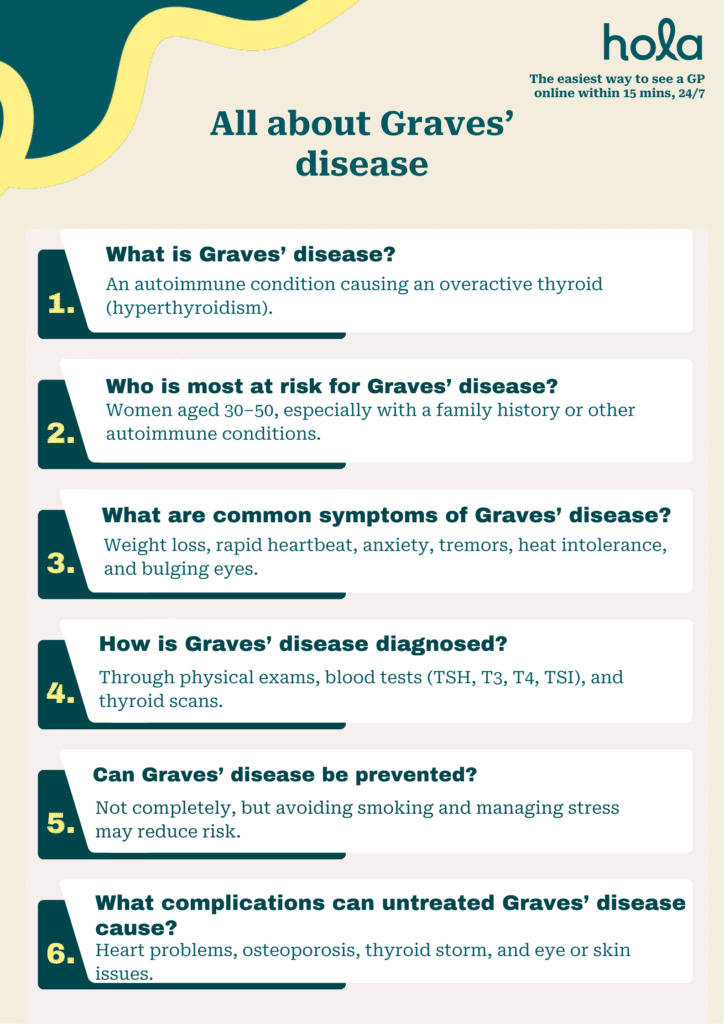
Graves’ disease is an autoimmune disorder that results in the overactivity of the thyroid gland, known as hyperthyroidism. This condition occurs when the immune system erroneously attacks the thyroid, causing it to produce excessive hormones. Typical symptoms include weight loss, rapid heart rate, anxiety, and protruding eyes. It predominantly affects women under 40 and is manageable with medication or alternative therapies. Also read: Weak immune system: Symptoms & GP approved tipsWhat causes Graves’ disease?
The underlying cause of Graves’ disease lies in the immune system, which mistakenly generates antibodies known as TSI (thyroid-stimulating immunoglobulins). These antibodies lead the thyroid gland to overproduce hormones, resulting in hyperthyroidism.Potential triggers can include:
- Genetics (family history)
- Stress
- Infections
- Smoking
- Hormonal fluctuations (e.g., during pregnancy)
What are the symptoms of Graves’ disease?
The symptoms associated with Graves’ disease are primarily linked to an overactive thyroid (hyperthyroidism) and can influence various aspects of the body.Typical symptoms include:
- Weight loss even with a normal or increased appetite
- Fast or irregular heartbeats (palpitations)
- Feelings of nervousness, anxiety, or irritability
- Tremors in the hands
- Increased perspiration or sensitivity to heat
- Fatigue or muscle weakness
- Frequent bowel movements
- Difficulties sleeping
- Enlarged thyroid gland (goitre)
- Eye symptoms, such as bulging eyes, redness, dryness, or irritation (Graves’ ophthalmopathy)
How to diagnose Graves’ disease?
Diagnosis of Graves’ disease involves a combination of physical examinations, blood tests, and imaging studies. Common diagnostic procedures include:- Physical exam: A healthcare provider may look for indicators such as an enlarged thyroid (goitre), bulging eyes, or a rapid heartbeat.
- Blood tests:
- TSH (thyroid-stimulating hormone) – typically low
- T3 and T4 – generally elevated
- TSI (thyroid-stimulating immunoglobulin) – confirms the autoimmune origin
- Thyroid scan: Uses a small amount of radioactive iodine to evaluate the thyroid's activity level.
- Ultrasound: Assists in evaluating the size and health of the thyroid gland.
Who does Graves’ disease affect?
Graves’ disease can impact anyone, but certain individuals have a higher likelihood of developing it.- Most frequently affected individuals include:
- Women, particularly between the ages of 30 and 50
- Those with a family history of thyroid or autoimmune diseases
- People with other autoimmune disorders (such as type 1 diabetes or rheumatoid arthritis)
- Smokers, who also face a greater risk of experiencing eye symptoms
- Individuals undergoing high stress or experiencing recent hormonal changes, such as following pregnancy
Can Graves’ disease be prevented?
Due to its primary drivers of genetic and autoimmune factors, individuals cannot completely avert Graves' disease. Nonetheless, you might lower the risk or alleviate symptoms by:- Avoiding smoking
- Managing stress levels
- Regularly talking to a doctor if you have a family history of thyroid or autoimmune disorders
- Prompt diagnosis and treatment can help avert severe complications.
Also read: Best foods for female hormonal imbalance
What are the possible complications of Graves’ disease?
If not treated, Graves’ disease may result in significant health issues, such as:- Cardiovascular problems (irregular heart rhythms, heart failure)
- Fragile bones (osteoporosis)
- Graves' ophthalmopathy (protruding eyes, vision difficulties)
- Thyroid storm (a rare, critical condition)
- In rare cases, patients may develop thickening of the skin (particularly on the shins), known as pretibial myxoedema.
Conclusion
Graves’ disease is a manageable autoimmune disorder that affects the thyroid gland. With early intervention and effective therapy, most individuals can keep symptoms under control and maintain a healthy lifestyle.Reference
- Graves’ disease - reference link
- National Library of Medicine - reference link
- National Library of Medicine - reference link
See a GP online within just 15 minutes.
Download the app today.

